Discontinued Product Pages: Keep, Redirect, or Return Real 404/410?
Do not delete discontinued product pages automatically or redirect every old model to the newest product. First verify the replacement relationship and the legacy documents people still need. Then keep a useful historical page, permanently redirect to a genuinely relevant destination, or return a real 404/410.
Someone searching an old model may need a replacement. Someone else may need installation instructions for equipment already in service. Sending both to the homepage removes the model from view without answering either question.
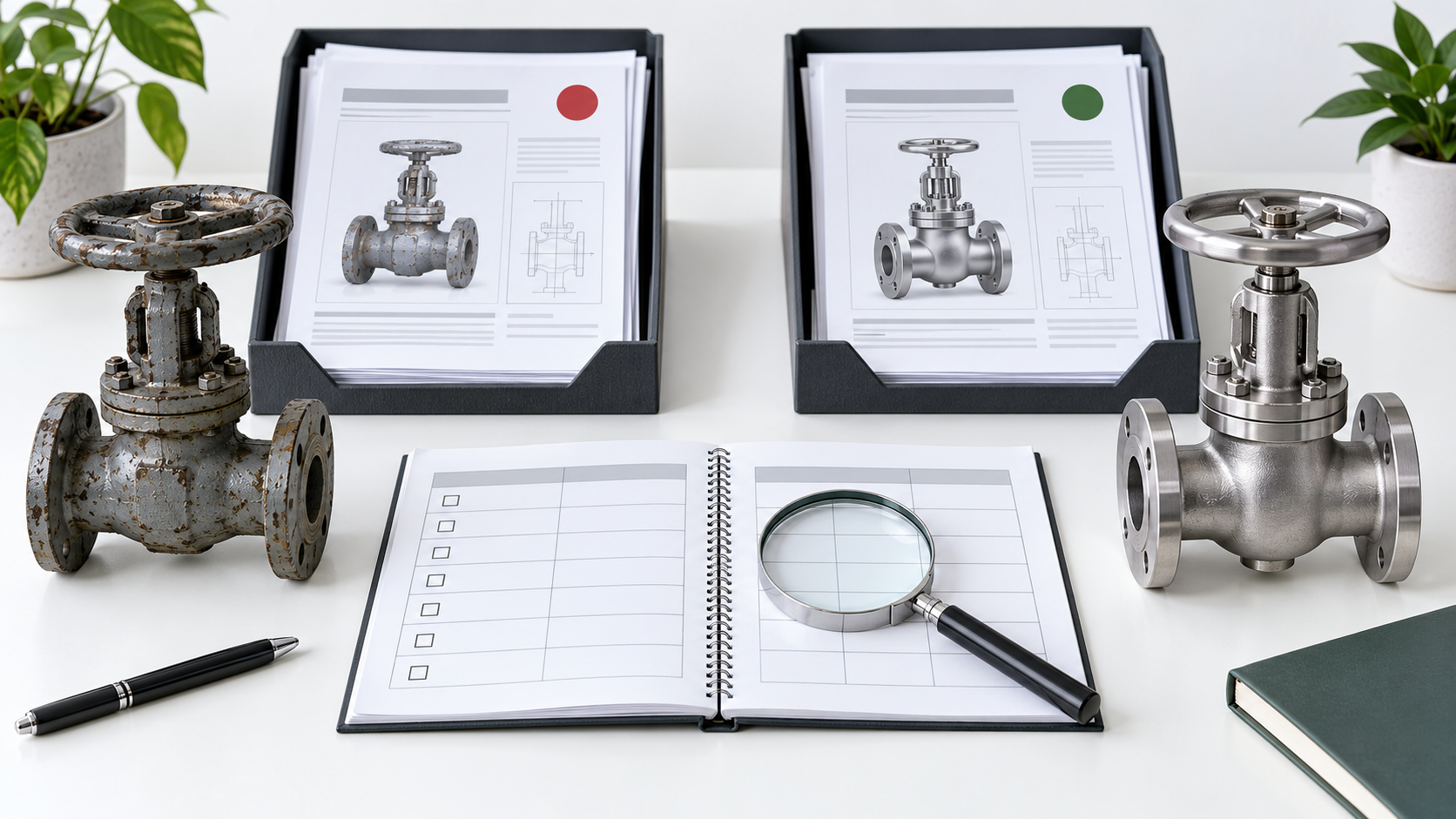
Establish what discontinued product pages still need to answer
Ask product and support owners whether the change affects a whole family or one configuration. Confirm any remaining stock, applicable document revisions and available repair or spare-parts services. Temporary unavailability, planned discontinuation and ended support are different statements.
Rockwell Automation’s lifecycle definitions distinguish End of Life from Discontinued and say repair or exchange services may remain available after discontinuation. This is its own terminology, not a support promise for every manufacturer.
When documents still serve installed equipment, consider keeping the existing URL as a clearly labeled historical page. Preserve the old model identity, applicable manuals and a confirmed support route. Do not simply rename it after the new model: the owner reading an old nameplate still needs recognition.
Replace misleading sales actions with an appropriate replacement or legacy-support inquiry. Do not retain unverified stock, delivery or warranty statements.
Replacement product verification comes before a redirect
A similar name or shared product family does not establish interchangeability. Product owners need to check relevant mounting interfaces, operating conditions, control methods and software versions. If engineering changes or safety requirements matter, describe confirmed limitations rather than approving a replacement through website copy.
In a hypothetical example, P40 is discontinued and P41 uses a different connection. These invented labels describe no actual product or test. “Upgrade to P41” leaves the installation question unresolved. Keep P40’s page while documenting the confirmed difference and the conditions that still need checking.
Consider discontinued product redirects only when the destination explains the old model relationship and covers the necessary documents and limitations. Relevance means preserving the task, not merely repeating a product keyword. When maintenance and new purchasing remain distinct tasks, an old-model page with a replacement link may be clearer.
Choose a response that matches the resource
The following is an editorial decision framework, not a universal removal policy.
| Confirmed situation | Possible handling | Check before proceeding |
|---|---|---|
| Old model still serves identification or support needs | Keep a substantive historical page with 200 | Status, support scope and document revisions |
| Content moved to a destination covering the original task | Server-side permanent 301 | Old-model explanation, limitations and document access |
| No relevant destination or useful content remains | Real 404 | No overlooked legacy support documents |
| Resource withdrawn and expected to remain unavailable | Consider 410 | Confirmed permanent withdrawal and its record |
Google’s migration guidance warns against redirecting many URLs to an irrelevant homepage; that can be treated as a soft 404. Apply this principle to old-model redirects and point directly to the relevant final destination.
For 404 versus 410, RFC 9110 says 404 does not establish whether absence is temporary or permanent. 410 indicates that access is no longer available and is likely permanently so. These describe the URL resource, not the product’s production status.
Google’s HTTP documentation places both among 4xx responses that lead indexed URLs to be removed over time. It supplies no basis for promising a ranking advantage from 410. Likewise, a 200 response needs useful content rather than a bare removal notice.
Blank old-model decision worksheet
This original worksheet is for one actual model. Blank entries are not completed customer validation.
| Field | Fill in |
|---|---|
| Identity | Model/configuration: ____; URL/language: ____ |
| Discontinuation evidence | Notice/scope: ____; confirmation/date: ____ |
| Remaining task | Replacement purchase/maintenance/identification: ____ |
| Replacement | Confirmed model: ____; source/owner: ____ |
| Fit limitations | Checked differences: ____; engineering questions: ____ |
| Legacy documents | File/revision/applicable model: ____; URL: ____ |
| Support status | Available services: ____; unknown/ended scope: ____ |
| URL decision | Keep/301/404/410: ____; reason: ____ |
| Redirect destination | Final URL: ____; original task coverage: ____ |
| Verification | HTTP/content/download result: ____; owner/review trigger: ____ |
Leave unclear compatibility assigned for confirmation. Do not guess from a model suffix to finish a redirect spreadsheet.
Verify the content and documents, not just the jump
For retained pages, reconcile the status label, sales action and document versions. For redirects, check the actual response, final language, old-model explanation and working downloads. For removals, verify the real 404/410 response; a helpful error page can offer navigation without returning 200.
Update editable catalog, category and article links. Track previously distributed links that may still bring visitors. The old-blog update and merge guide covers overlapping editorial tasks, not product compatibility approval.
FAQ
Does a new model mean the old page should redirect?
No. Confirm suitability and document coverage first. Retain a historical page when old equipment still needs its answers.
Must a discontinued model without a replacement return 404?
No. Useful manuals or a confirmed support route can justify retention. Consider removal when neither content nor a relevant destination remains.
Is 410 better for SEO than 404?
Choose based on confirmed permanence, not a ranking claim. Both can lead the URL out of the index.
Conclusion: assign the old model’s ongoing responsibility
Handle discontinued product pages by confirming replacement fit, document ownership and support status before selecting the URL response. The B2B Manufacturing SEO Guides hub connects related page-management topics. Keep the document and status owner in the record so the page can be reviewed when support or replacement conditions change.
Sources
- Rockwell Automation: Lifecycle definitions
- Google: URL moves and irrelevant redirects
- Google: HTTP status codes
- RFC 9110: 404 and 410
Read on October 5, 2026.